On July 2, 2026, The New Republic magazine published an article by Una Hajdari, who despite being highly critical of President Trump’s projects in Washington, D.C., wrote:
A critic rather than a practicing architect, Shubow has long argued that the architecture of American democracy was hijacked some 75 years ago by a modernist elite contemptuous of “ordinary people,” and calls brutalism, the raw-concrete style of midcentury government buildings, “aesthetic pollution.” Praising Trump’s [executive] order, he wrote that “since the mid-20th century, Modernist mandarins controlling government architecture have been forcing ugly designs upon us.”
Shubow’s argument has genuine populist purchase because it is half true. Federal Washington is overwhelmingly neoclassical, and the midcentury turn to modernism was a real break from it. Americans associate government buildings with columns and domes because that is what they mainly were and are today. (And to be fair, Shubow’s view of Washington’s brutalist buildings is widely held among locals.)
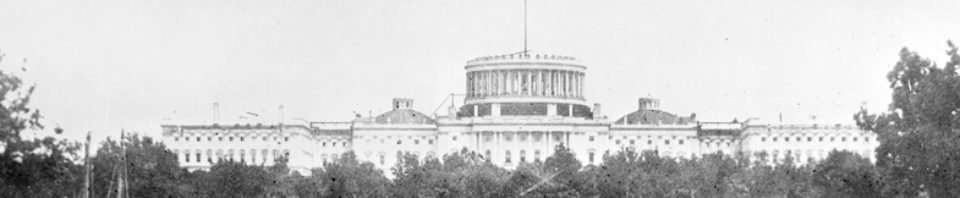
The Founders saw their fragile new republic as the heir to Athens and republican Rome, and they wanted the buildings to say so. Thomas Jefferson modeled Virginia’s Capitol building on a Roman temple precisely to claim that lineage in stone. The U.S. Capitol, the White House, the Supreme Court, and the earlier memorials along the Mall used classicism as an argument that the United States belonged among the self-governing republics of antiquity.